
Water That Drains Away From Building Foundations
Grading & Leveling Services in Owensboro for properties with standing water and uneven terrain causing drainage failures
Pooling water against foundation walls saturates soil that expands when wet and contracts when dry, creating the pressure cycles that crack concrete and push basement walls inward. You notice this problem when gutters overflow onto grade that slopes back toward the house, or when low spots collect runoff that kills grass and breeds mosquitoes. H&M Property management provides grading and leveling services across Owensboro, reshaping property contours to direct water away from structures and eliminate areas where runoff stagnates instead of flowing to drainage outlets.
Grading work establishes positive slope by adding fill soil in low areas and removing high spots, creating a continuous grade that moves surface water toward designed discharge points. Land leveling uses laser-guided equipment to achieve uniform slopes across large areas, critical for athletic fields or building pads that require precise elevations. Slope correction addresses terrain that directs water toward buildings rather than away, often by regrading within ten feet of foundation walls to achieve the minimum two-percent pitch that ensures gravity drainage.
Arrange a drainage assessment to identify existing grade problems and review options for correcting water flow patterns on your property.
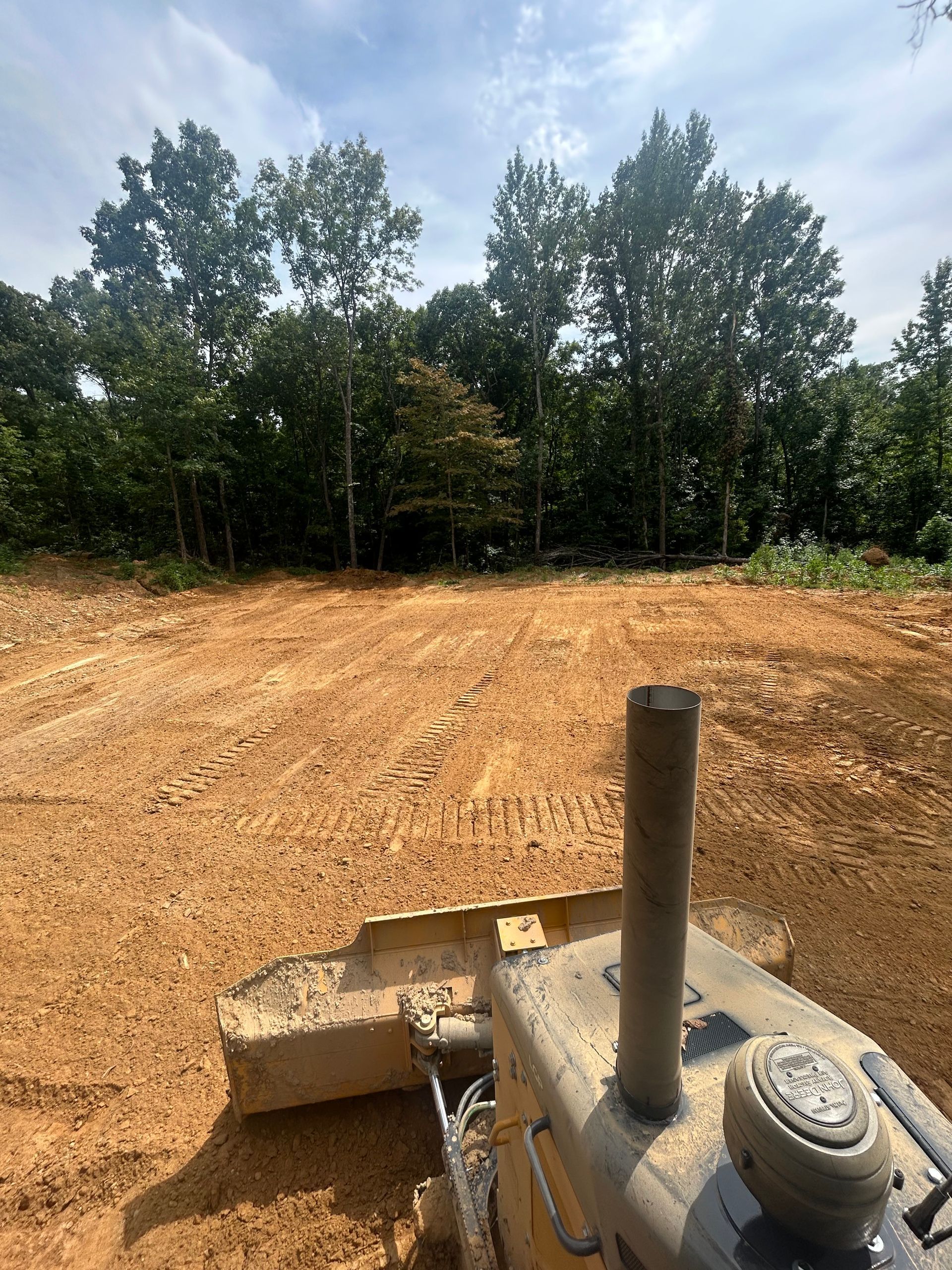
Why Proper Grading Works for Wet Sites
Effective grading creates drainage pathways that function during heavy rain events, not just average conditions, by sizing swales and slopes to handle Owensboro's typical storm intensities without overtopping or eroding. Site preparation includes removing organic topsoil before placing structural fill, since decomposing vegetation compresses over time and creates settling that reverses drainage slopes. Water runoff management combines surface grading with subsurface drainage where soil permeability is too low for infiltration alone, using perforated pipe in gravel-filled trenches that intercept groundwater before it reaches foundations.
Once grading finishes, rainwater visibly flows away from structures toward yard edges or catch basins, and previously wet areas dry out between storms instead of remaining saturated. Lawn areas show uniform slope without dips where mowers scalp high spots or leave uncut grass in low pockets, and water no longer stands in driveways or walkways after typical rainfall. The regraded surface compacts uniformly under equipment passes, indicating proper moisture content and soil type for long-term stability.
Property grading sometimes requires culvert installation where drainage crosses driveways or pathways, and permits when work alters natural drainage patterns affecting neighboring properties. Grading near mature trees balances drainage needs against root protection zones, since adding fill over roots suffocates them while cutting into root zones destabilizes trees during wind events.
Common Questions About This Service
Property owners dealing with drainage issues or planning construction often ask how grading solves water problems and what the work involves.
What slope does proper grading create?
Finished grade falls at least two percent within the first ten feet from foundation walls, dropping roughly two and a half inches over that distance to move water away before it seeps into basement walls or under slabs.
How does Kentucky clay affect grading work?
Clay soils drain slowly, so grading often includes subsurface drainage pipes that collect water infiltrating through topsoil before it saturates the clay layer, preventing the swelling that cracks foundations.
When should grading happen during landscaping projects?
Rough grading occurs before underground utilities are installed, with final grading completed after construction traffic ends but before topsoil placement, preventing compaction of planting areas.
What indicates grading quality after completion?
Water visibly flows toward designated drainage points during rain rather than pooling, and previously soggy areas support foot traffic within twenty-four hours of typical storms instead of remaining muddy for days.
How long before grass grows on regraded areas?
Topsoil placement and seeding follow final grading within days to prevent erosion, with germination occurring in one to two weeks if soil moisture and temperatures support growth.
H&M Property management develops grading plans that address current drainage failures while accommodating future landscaping and hardscape features. Set up a property visit to map existing drainage patterns and outline grading solutions tailored to your site conditions.