
Outdoor Spaces Designed for Year-Round Function
Landscaping Services in Owensboro for properties requiring plant installation and outdoor improvements that match local growing conditions
Kentucky's USDA hardiness zone 6b limits plant selection to species that tolerate winter lows near zero degrees and summer heat indexes above ninety-five, eliminating many ornamentals that thrive in milder climates but fail here after one severe winter. H&M Property management provides landscaping services across Owensboro, installing plants, creating planting beds, and implementing property enhancements that function in local soil and climate conditions. You need this service when establishing new landscaping after construction, replacing failed plantings with appropriate species, or upgrading outdoor areas to add curb appeal or functional garden space.
Landscape installation begins with bed layout and soil preparation, removing existing turf and amending clay-heavy native soil with organic matter that improves drainage and root penetration. Planting and bed installation follows design plans that group plants by water and sunlight needs, preventing the common failure where shade-loving species get planted in full sun or drought-tolerant plants sit in poorly drained low spots. Property enhancements range from decorative mulching and border definition to retaining wall installation and pathway construction that add structure to outdoor spaces.
Request a site consultation to discuss planting goals and review options for improving your property's landscape functionality and appearance.
The Difference Between Installation and Maintenance
Successful landscape installation accounts for mature plant size rather than initial nursery dimensions, spacing specimens to avoid overcrowding that creates pruning headaches or disease pressure as plants reach full growth. Plant selection considers not just aesthetics but practical factors like deer resistance, root behavior near foundations or utilities, and maintenance requirements that match homeowner capability and interest. Bed preparation includes landscape fabric or mulch depth sufficient to suppress weeds without smothering plant crowns, and irrigation planning that delivers water to root zones rather than foliage where it encourages fungal problems.
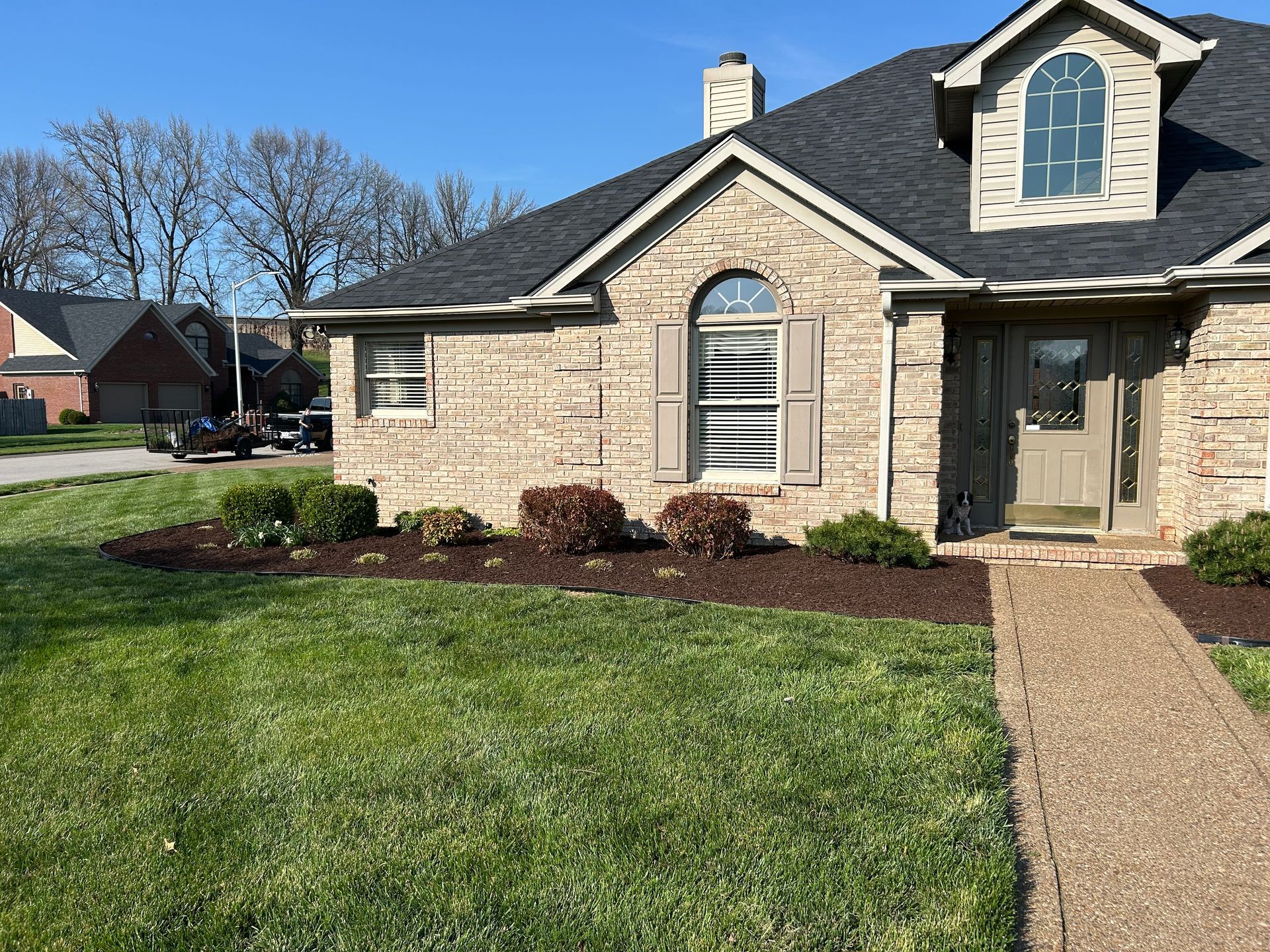
Once landscape improvements finish, you see defined planting areas with uniform mulch depth, properly spaced plants showing no transplant shock, and borders that separate turf from ornamental beds without gaps or overlaps. New plantings establish visible root growth within weeks rather than sitting dormant, indicated by new leaf development and upright posture instead of wilting or yellowing that signals installation problems. Mulched beds prevent weed emergence and moderate soil temperature swings that stress shallow roots during their first season.
Landscape installation does not include ongoing maintenance like pruning, fertilization, or pest control unless added separately, focusing instead on initial plant establishment and hardscape construction. Planting season affects success rates, with spring and fall installations outperforming summer work because moderate temperatures and seasonal rainfall reduce transplant stress and watering demands during the critical establishment period.
What Property Owners Usually Ask
Homeowners planning landscape projects often have questions about plant selection, installation timing, and what happens after plants go in the ground.
What makes certain plants succeed in Owensboro?
Species native to the region or bred for similar climates tolerate local clay soils, humidity, temperature extremes, and pest pressures better than imports requiring constant intervention to survive outside their adapted range.
How does soil preparation affect plant survival?
Breaking up compacted clay and adding compost creates root zones where water drains instead of pooling, and where roots penetrate deeply enough to access moisture during summer dry spells rather than remaining shallow and drought-stressed.
When should landscape installation happen for best results?
Spring planting from March through May allows root establishment before summer heat, while fall installation from September through October lets plants develop roots during mild weather before winter dormancy begins.
What ongoing care do new plantings require?
Newly installed plants need consistent watering through their first growing season until roots extend beyond the original root ball, after which most established landscapes require irrigation only during extended drought periods.
How long before landscape improvements reach mature appearance?
Trees and shrubs installed at typical nursery sizes take three to five years to fill their intended space, while perennials and groundcovers often spread to coverage within one to two seasons depending on species growth rate.
H&M Property management sources plants suited to Owensboro's climate and soil conditions, avoiding species that require excessive maintenance or fail during typical weather extremes. Schedule a property review to outline landscape goals and develop an installation plan based on your site's specific sun exposure, drainage, and use requirements.