
Sites Ready for Safe Construction Work
Land Clearing Services in Owensboro for properties requiring brush removal and lot preparation before building begins
H&M Property management handles land clearing services across Owensboro, removing brush, trees, and overgrown vegetation from residential and commercial lots. You need this service when raw land contains dense undergrowth, fallen timber, or invasive species that prevent construction equipment access or create fire hazards. Clearing work exposes the actual grade and soil conditions that determine foundation placement and drainage design.
The process removes all surface vegetation down to bare soil, grinds stumps below grade, and hauls debris offsite, leaving a clean slate for grading or building. Forestry mulching equipment processes trees and brush into ground cover that prevents erosion on slopes, while tracked excavators handle larger timber and root systems that require complete extraction. Kentucky's clay-heavy soils mean root systems often extend wider and shallower than in sandier regions, requiring different extraction techniques to avoid leaving voids that settle later.
Schedule a site walkthrough to identify clearing limits and discuss debris disposal requirements for your property.
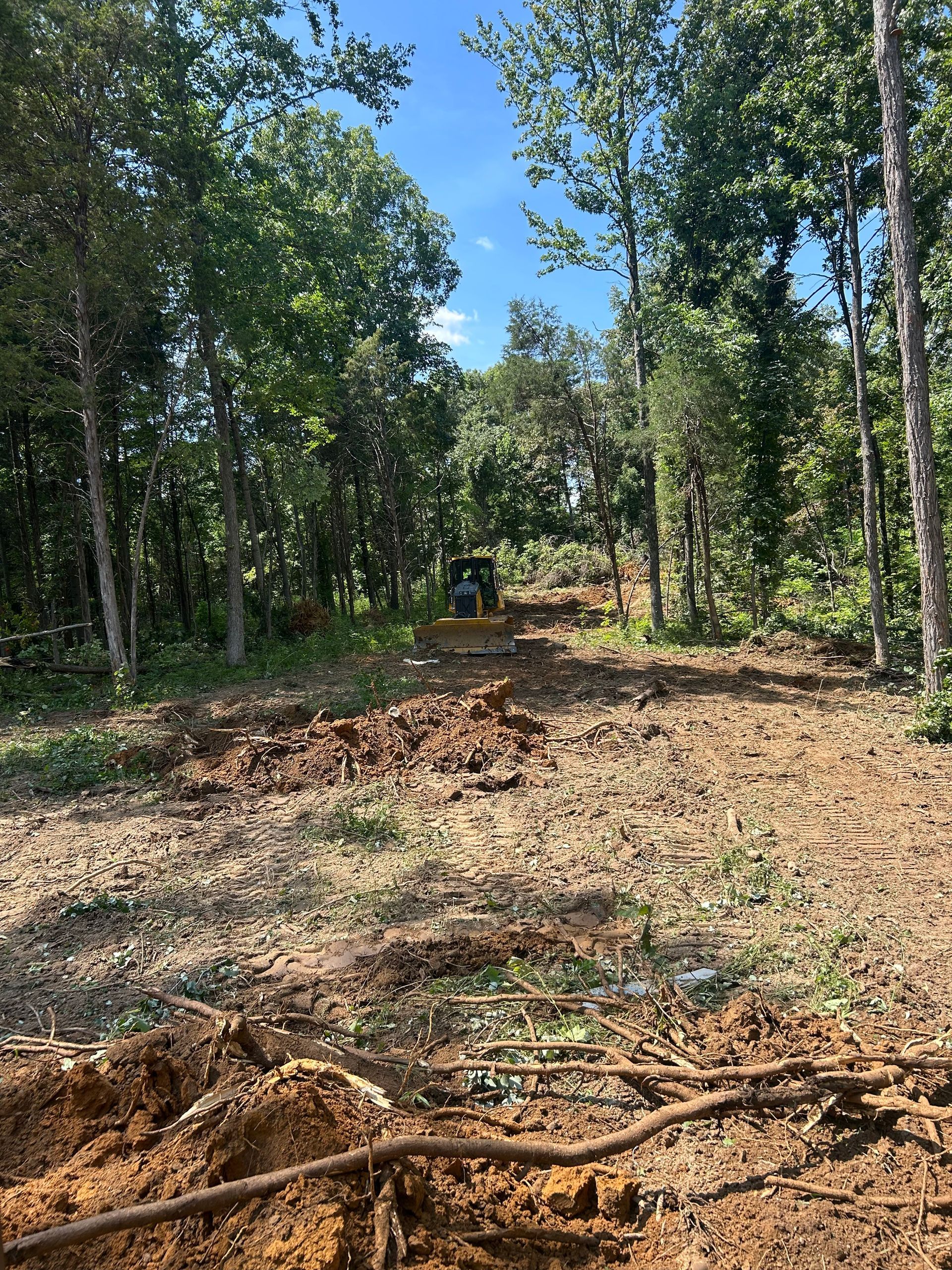
What Proper Lot Clearing Accomplishes
Effective clearing removes not just visible vegetation but root masses that decompose and create settling issues under driveways or foundations. Operators mark utility corridors and property boundaries before equipment enters, preventing accidental damage to infrastructure or encroachment disputes. The choice between mulching vegetation in place versus complete removal depends on whether you need immediate construction access or prefer gradual soil enrichment on land that will sit vacant through a growing season.
Once clearing finishes, you see defined property boundaries, exposed soil conditions, and unobstructed access for survey crews and excavation equipment. Stumps ground six inches below finish grade allow topsoil placement without future settling, while burn piles are eliminated, reducing ongoing maintenance and fire risk. The cleared footprint reveals drainage patterns and low spots that were hidden under canopy cover.
Construction site preparation includes staging area designation and access road establishment, ensuring heavy equipment can reach work zones without rutting surrounding areas. Seasonal timing affects soil compaction risk, with frozen ground supporting equipment better than saturated spring soils. Clearing contracts specify whether topsoil gets stripped and stockpiled separately or mixed with fill material during rough grading.
What Property Owners Usually Ask
Questions about land clearing often focus on debris handling, timing considerations, and what remains after crews finish.
What happens to the cleared trees and brush?
Vegetation gets chipped for mulch, hauled to disposal sites, or processed into firewood depending on species and size, with hardwoods often salvaged and softwoods typically mulched on-site to decompose.
How does Kentucky clay soil affect clearing work?
Clay retains moisture longer than sandy soils, so tracked equipment is used instead of wheeled loaders during wet periods to prevent rutting and soil structure damage that creates drainage problems later.
When should clearing happen before construction starts?
Clearing at least four weeks before excavation allows time for herbicide treatment of stump sprouts and root-killing, preventing regrowth that pushes through gravel or compromises foundation drainage systems.
What gets left behind after lot cleanup?
Bare mineral soil remains, with organic topsoil either stockpiled separately for later landscaping or mixed into the cleared area depending on whether immediate grading follows or the site will sit vacant.
How deep do stumps need grinding for building sites?
Stumps are ground eight to twelve inches below planned finish grade, allowing adequate soil cover for grass establishment or concrete placement without future settling as wood decomposes underground.
H&M Property management coordinates clearing schedules with survey crews and utility locators to ensure work progresses without delays. Arrange a property assessment to establish clearing boundaries and develop a debris management plan suited to your timeline.